Aluminum Alloy Extruded Parts
In the realms of modern industry and architecture, aluminum profiles are ubiquitous. From window and door frames to automotive components, their lightweight nature, high strength, and corrosion resistance make them an indispensable material.
Product Description
A Comprehensive Analysis of the Aluminum Profile Extrusion Process:
From Die Design to Surface Treatment
In the realms of modern industry and architecture, aluminum profiles are ubiquitous. From window and door frames to automotive components, their lightweight nature, high strength, and corrosion resistance make them an indispensable material. The transformative—and almost magical—process that converts an ordinary aluminum billet into a profile with a specific cross-sectional shape is known as aluminum profile extrusion. This article provides an in-depth analysis of the entire workflow—spanning from die design to CNC machining and surface treatment—examining the core principles, key equipment, process parameter controls, common defects, and their corresponding solutions.
The Starting Point: Die Design and Manufacturing
The starting point of the aluminum alloy extrusion process is the die, which determines the final shape and surface quality of the aluminum profile. The design of the die requires precise calculations regarding the flow dynamics of the metal.
Die Structural Design: For hollow profiles, a split-flow combination die is typically employed. Its working principle is as follows: a heated aluminum billet is placed into the extrusion cylinder; under pressure, the billet is divided into two or more separate metal streams that flow through a "split-flow bridge." These streams then reconverge within a "welding chamber," where—under conditions of high temperature and pressure—they are forged together into a single, cohesive entity. Finally, the metal flows out through the gap formed between the die core and the die opening, thereby forming a profile containing internal cavities. To prevent the profile from twisting during extrusion (a particular concern for profiles with poor cross-sectional symmetry, such as beams with wide flanges), the die design often incorporates specialized structural features. For instance, a protruding "half-core head" structure may be positioned on the exit side of the upper die; this structure aligns directly with the opening in the lower die and serves to regulate and stabilize the metal flow rate. By preventing flow rate disparities caused by variations in wall thickness—where one side flows faster than the other—this design ensures the straightness of the extruded profile.
Die Machining Quality Control: The machining precision of the die directly impacts the quality of the resulting profile. Modern manufacturing processes rely heavily on CNC machining centers to ensure this precision. Common machining defects include: improperly rounded chamfers on the split-flow bridge (leading to poor weld integrity), rough or uneven surfaces within the feed channels (resulting in concave depressions or bright lines on the profile surface), and inconsistent hardness across the die's "working land" (the critical bearing surface). To address these issues, a series of measures are typically implemented—such as utilizing CNC programming to machine the ports and welding chambers, thereby ensuring the precision of their complex three-dimensional geometries; and employing slow-wire electrical discharge machining (EDM) to cut intricate die apertures, thereby guaranteeing the dimensional accuracy and surface finish of the bearing surfaces. Furthermore, the heat treatment of the die is of paramount importance; the application of vacuum heat treatment and surface strengthening techniques (such as nitriding) can significantly extend the die's service life and enhance the surface quality of the extruded profile.
Core Principles and Metal Flow
The core principle of the aluminum alloy extrusion process lies in inducing the plastic flow of the metal while it is under a state of triaxial compressive stress. Based on the relationship between the direction of extrusion and the direction of metal flow, the process is primarily categorized into two types: direct extrusion and indirect extrusion.
Direct Extrusion: This is currently the most widely adopted method. The extrusion stem drives a dummy block, pushing the billet forward along the inner wall of the container so that it flows through the die aperture to be extruded. The advantage of this method is its operational flexibility; however, its disadvantage lies in the substantial frictional force generated between the inner wall of the container and the billet, which increases energy consumption and makes it more difficult to control the uniformity of the metal flow.
Indirect Extrusion: In this method, one end of the container is closed, and the extrusion stem drives the die to move relative to the stationary billet. Consequently, there is no relative motion between the billet and the inner wall of the container, resulting in a significant reduction in frictional force. This leads to a more uniform metal flow, allows for lower extrusion temperatures, and facilitates the production of profiles with greater dimensional precision and more uniform mechanical properties.
Throughout the entire extrusion process, the flow of metal can be broadly divided into three distinct stages:
Filling Stage: Under the influence of the upsetting force, the billet expands to fill the container and the die aperture until the volume is completely occupied.
Steady-State Extrusion Stage: The metal flow stabilizes, establishing a steady-state extrusion condition wherein the profile is extruded uniformly.
Turbulent Flow Stage: During the latter stages of extrusion, as the length of the billet diminishes, the "dead zone" metal (stagnant material) begins to be drawn into the flow stream; this disrupts the laminar flow of the metal and increases the susceptibility to defects such as voids or laminations.
Control of Key Process Parameters
To produce high-quality aluminum alloy profiles, it is imperative to precisely control the following key process parameters:
Extrusion Temperature
Temperature is one of the most critical parameters within the extrusion process. If the temperature is too low, the metal's deformation resistance becomes high, making extrusion difficult and increasing the risk of die damage; conversely, if the temperature is too high, issues such as surface cracks and coarse grain structures may arise, or even "overheating" (burning) may occur. Typically, the heating temperature for aluminum alloy billets varies depending on the specific alloy grade, generally ranging from approximately 450°C to 500°C. Concurrently, the extrusion die must also be preheated to a similar temperature to prevent a rapid drop in temperature—which would hinder metal flow—when the hot aluminum comes into contact with the cooler die.
Extrusion Speed
Extrusion speed refers to the forward velocity of the extrusion ram. It directly influences the thermal equilibrium within the deformation zone. If the speed is too high, the heat generated by deformation effects can cause a rapid rise in temperature, potentially leading to surface roughness, cracking, or accelerated die wear; conversely, if the speed is too low, production efficiency suffers, and the surface of the extruded profile may exhibit a rough texture resembling "orange peel." For hollow profiles requiring robust weld bonding, sufficient time and pressure within the welding chamber are essential to ensure complete metal fusion; therefore, precise speed control is particularly critical in these instances.
Extrusion Ratio and Specific Pressure
Extrusion Ratio (λ):This is defined as the ratio of the billet's cross-sectional area to the total cross-sectional area of the extruded profile. It serves as an indicator of the degree of metal deformation. A higher extrusion ratio signifies more intense deformation.
Unit Extrusion Force (Specific Pressure):This refers to the pressure exerted by the extrusion ram upon a unit area of the billet. This pressure must be sufficiently high to overcome the metal's deformation resistance and frictional forces, thereby forcing the metal through the die. Insufficient pressure can result in "die jamming" or the production of profiles with unacceptable dimensional tolerances.
Common Defects and Solutions
During the extrusion process, various defects may arise due to factors such as die design, process parameter settings, or the condition of the extrusion equipment.
Twisting and Bending
Causes:This is one of the most common defects, primarily resulting from non-uniform metal flow velocities as the material exits the die orifice. For instance, when there are significant disparities in wall thickness across the profile's cross-section—where resistance is higher and flow velocity is slower in thin-walled areas, while flow velocity is faster in thick-walled areas—the profile may become "bent" or "twisted like a corkscrew" the moment it emerges from the die.
Solutions: Die Bearing Adjustment: By increasing the length of the bearing in areas where the metal flow is rapid, frictional resistance is increased to slow down the flow rate; conversely, by reducing the thickness of the bearing in areas where the flow is slow, resistance is lowered to accelerate the flow, thereby bringing the flow rates across the entire cross-section into closer alignment. Process Optimization: Reduce the extrusion speed or employ low-temperature extrusion techniques to minimize disparities in metal flow behavior. Die Structure Optimization: Implement structural modifications—such as the aforementioned "semi-mandrel" design—to balance the metal flow rates at the source.
Weld Lines: Causes: These defects primarily occur in hollow profiles or profiles extruded using bridge dies. After the aluminum billet is divided by the bridge die's splitter bridges, the metal streams reconverge within the weld chamber. If the pressure within the weld chamber is insufficient, the temperature is too low, or if oxides or oil contaminants are present on the metal surfaces, the metal streams will fail to "weld" together perfectly. This results in the formation of a visible dark line or seam on the profile surface—known as a weld line. In severe cases, this defect can compromise the profile's mechanical properties and even lead to cracking.
Solutions: Increase Welding Pressure: Ensure the weld chamber possesses a sufficient cross-sectional area to allow the metal to generate adequate hydrostatic pressure within the chamber. Maintain Cleanliness: Ensure the billet surface is clean and free of oil stains or non-metallic inclusions. Increase Temperature: Appropriately raise the temperatures of both the billet and the die to promote atomic diffusion and recrystallization within the metal, thereby facilitating a robust metallurgical bond. Die Design: Optimize the geometry of the splitter bridges (e.g., adopting a teardrop shape) to minimize flow resistance and ensure the weld chamber possesses adequate volume.
Surface Streaks (Friction Marks and Structural Marks)
Friction Marks: These occur when the profile exits the die orifice and undergoes dry friction against the die bearing. Localized adhesion of the metal to the die bearing results in the formation of periodic striations on the profile surface.
Solutions include optimizing the die bearing angle (e.g., incorporating an exit angle of -1° to -3°) and subjecting the die to nitriding treatment to enhance its surface hardness and reduce the coefficient of friction.
Structural Marks: These defects stem from non-uniformity in the billet's metallurgical structure, elemental segregation, or insufficient homogenization treatment. Consequently, when the extruded aluminum profiles undergo subsequent surface treatments—such as anodizing and coloring—they exhibit variations in color intensity or shade. Addressing this issue requires intervening at the casting stage to optimize the casting process and performing surface scalping (peeling) on the billets prior to extrusion. Summary of Common Aluminum Extrusion Defects and Remedial Measures
Defect Type | Primary Cause | Solution
Twisting/Bending | Uneven metal flow velocity exiting the die orifice (e.g., due to wall thickness variations) | Refine the die bearing (working band); reduce extrusion speed; optimize the die's flow-guiding structure.
Weld Lines | Insufficient pressure or temperature within the porthole die's welding chamber; metal failed to fuse perfectly | Increase welding pressure; raise the billet temperature; optimize the design of the porthole bridges.
Surface Streaks | Friction against the die bearing (friction marks); segregation within the ingot microstructure (structural marks) | Perform nitriding treatment on the die; optimize the die bearing angle; improve the casting process; scalp (surface machine) the ingot.
Post-Extrusion Processing: From Straightening and CNC Machining to Surface Treatment
Aluminum alloy profiles are not considered complete immediately after extrusion; they must undergo a series of subsequent processing steps:
Online Quenching: For aluminum alloys requiring heat treatment for strengthening (e.g., 6-series alloys), the profiles must be cooled immediately after extrusion (via air or water cooling) to retain the solid solution structure, thereby preparing the material for subsequent artificial aging.
Stretch Straightening: Extruded profiles typically exhibit slight bending or twisting. By applying a specific amount of permanent elongation (typically 0.5% to 3%) using a stretcher, internal stresses can be relieved and the profiles effectively straightened.
Sawing and Cut-to-Length: The profiles are cut into specific lengths according to customer requirements.
Artificial Aging: Through artificial aging (e.g., heating to 175°C–200°C and holding for several hours), strengthening phases are precipitated within the alloy matrix, enabling the profiles to achieve the required mechanical properties (T5 or T6 temper).
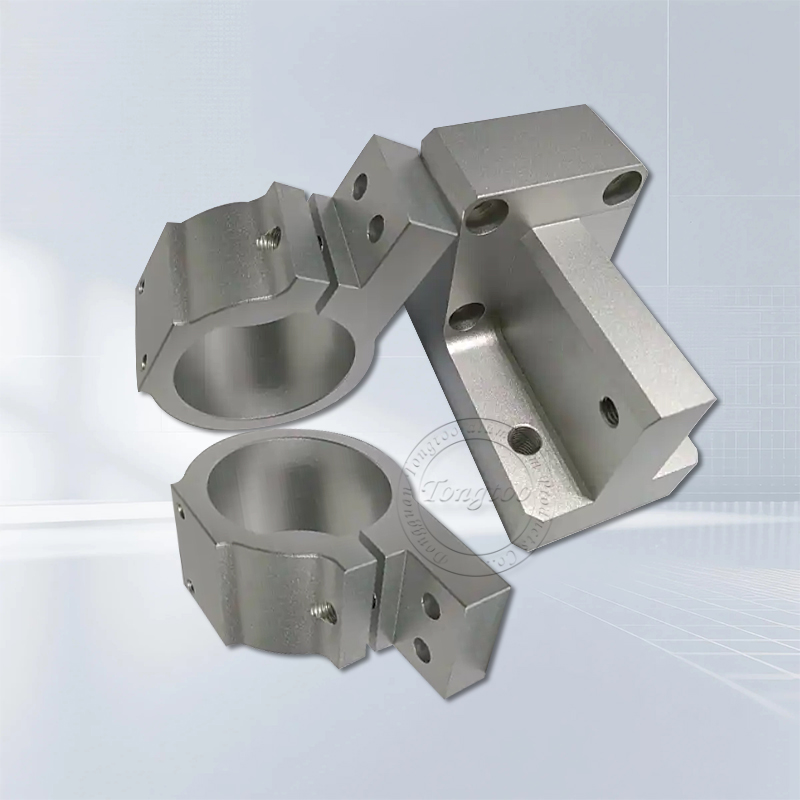
CNC Machining: Based on customer drawings, the extruded aluminum components can undergo precision CNC machining operations, such as milling, drilling, and tapping.
Surface Treatment: To enhance corrosion resistance and aesthetic appeal, aluminum alloy profiles typically undergo surface treatment. Common processes include anodizing (forming a protective oxide film), electrophoretic painting, or powder coating. Some innovative processes even attempt to apply thermal spraying immediately after extrusion—achieving "online" surface treatment—to further boost production efficiency. Aluminum profile extrusion is a comprehensive technology that integrates materials science, fluid mechanics, and precision machining. From the initial, humble die to the final, aesthetically pleasing, and durable profile, every step of the process is replete with technical challenges and intellectual ingenuity.

Currently, this field is evolving toward greater energy efficiency, reduced emissions, high precision, and intelligent automation. For instance, innovative research into utilizing shaped spacers and shaped billets to minimize waste generated during transverse welding holds the promise of elevating material utilization rates to unprecedented levels. Concurrently, by leveraging finite element simulation technology, engineers can digitally predict metal flow and optimize die designs and process parameters—thereby significantly shortening development cycles and reducing the costs associated with trial-and-error. As technology continues to advance, we can anticipate seeing an increasing array of aluminum profiles—characterized by complex cross-sections, superior performance, and highly efficient production—being applied across a wide spectrum of industries.