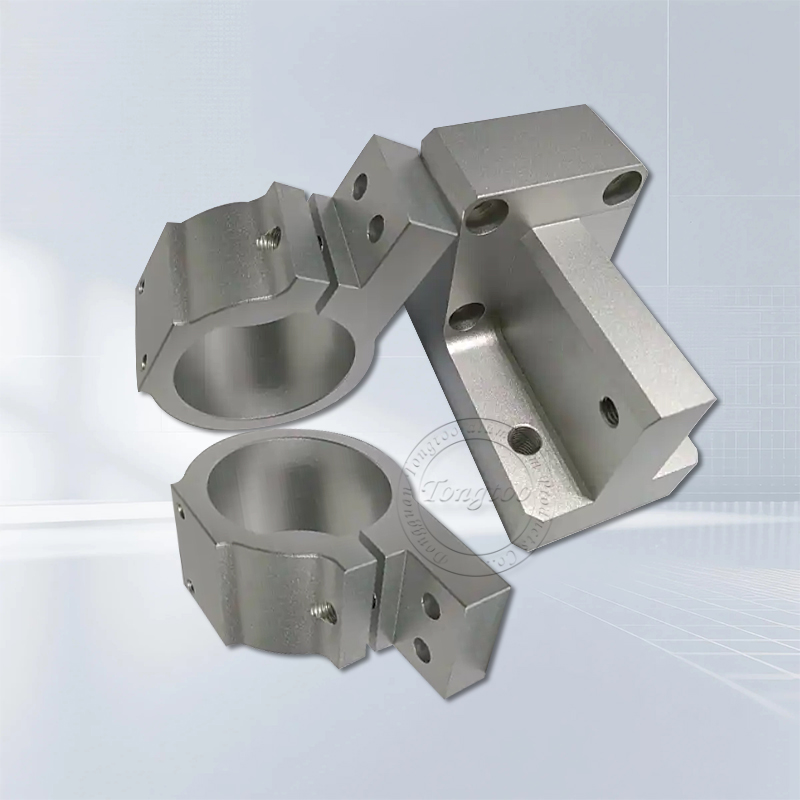
CNC Aluminium Parts
We are a modern precision manufacturing enterprise integrating high-precision CNC machining, surface treatment, assembly, sales, and service.
Product Description
Professional Aluminum Alloy CNC Precision Machining Service Provider
Company Overview
We are a modern precision manufacturing enterprise integrating high-precision CNC machining, surface treatment, assembly, sales, and service. With years of deep experience in the field of aluminum alloy precision machining, we focus on providing customers with comprehensive, customized machining services—from blueprints to finished products. Headquartered in Dongguan, Guangdong Province—a renowned manufacturing hub in China—and leveraging the robust industrial supply chain of the Guangdong-Hong Kong-Macao Greater Bay Area, we have developed into a CNC precision machining manufacturer characterized by strong technical capabilities, advanced equipment, and standardized management. Since our inception, we have upheld the business philosophy of "Quality First, Customer Foremost," dedicated to delivering high-quality aluminum alloy CNC machining solutions to global clients.

Mission and Vision
Mission: To empower product innovation through precision manufacturing and ensure every aluminum alloy part stands as a testament to quality.
Vision: To become a trusted global partner in aluminum alloy CNC precision machining, refining every detail with the spirit of craftsmanship.
Core Business
We specialize in aluminum alloy CNC precision machining, primarily focusing on the custom production of various non-standard aluminum alloy parts.
Our business scope covers the R&D and design of aluminum profile molds, mold making, extrusion, CNC milling, CNC turning, custom non-standard parts, metal stamping, bending, prototyping, as well as small-to-medium batch and large-scale mass production.
Our products are widely used in the following sectors:
Automotive Industry: Engine brackets, suspension system components, interior trim, radiators, etc.
3C Consumer Electronics: Mobile phone housings, laptop panels, smartwatch casings.
Medical Devices: Equipment housings, precision structural components.
Industrial Automation: Robot frameworks, instrument panels, controller housings.
Communication Equipment: Cavity components, heat dissipation structures.
Home & Lighting: Lighting accessories, decorative panels, bathroom fixture handles.
Machining Capabilities and Equipment
Equipment Scale
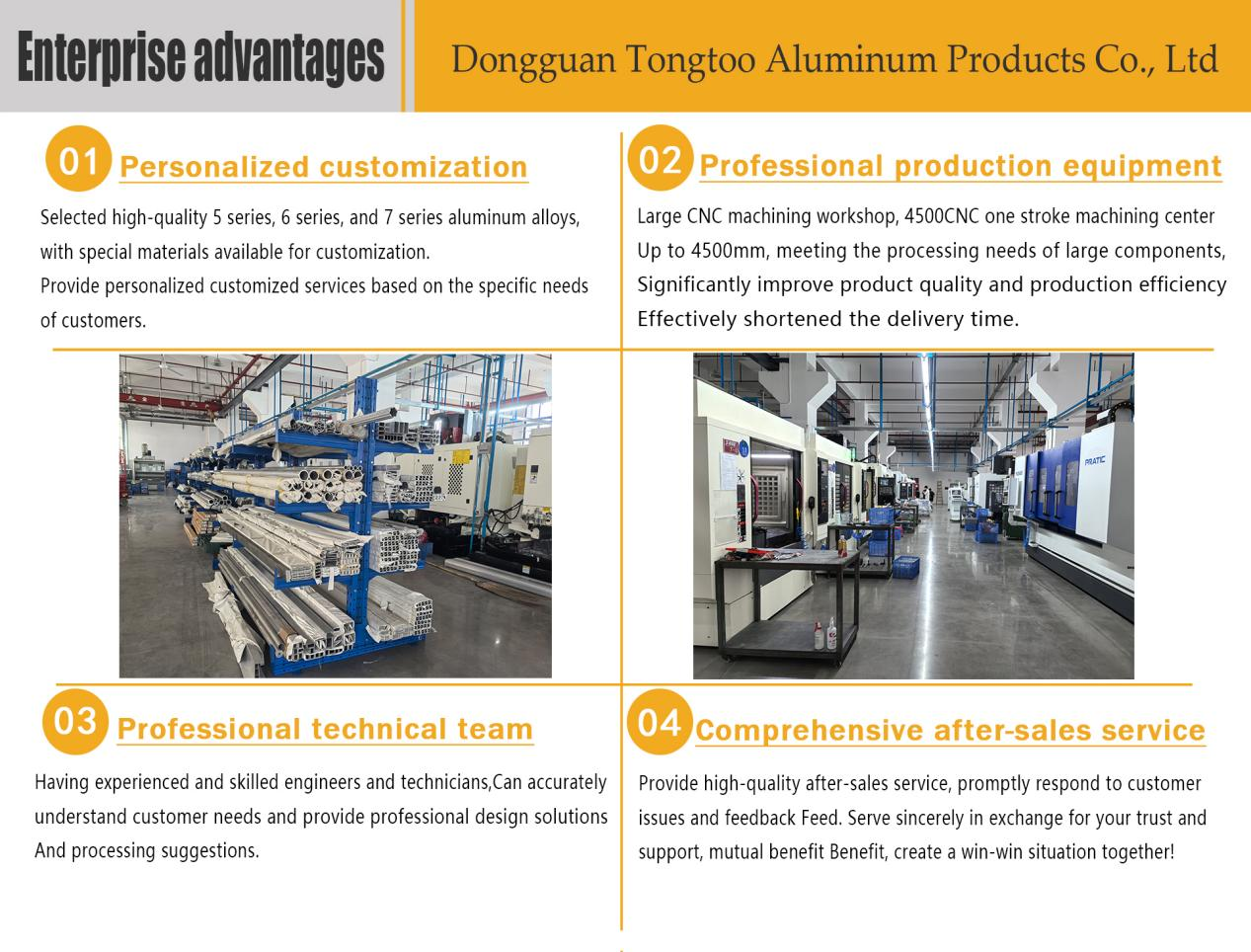
We are equipped with advanced CNC machining centers—including 3-axis, 4-axis, and 5-axis simultaneous machining centers—alongside auxiliary equipment such as CNC lathes, milling machines, drilling machines, and wire-cut EDM machines. Our machinery comes from leading domestic and international manufacturers, ensuring high machining precision and stability. Machining Precision
Leveraging high-precision CNC equipment and mature process systems, we consistently maintain machining tolerances within ±0.01mm. Whether dealing with simple geometric shapes or complex, irregular structures, we ensure a high degree of dimensional and geometric consistency.
Materials
We possess deep expertise in the machining characteristics of various aluminum alloy grades, including—but not limited to—6061, 6063, 7075, 5052, 5083, 6082, 2024, and 7050. By precisely adjusting process parameters based on the specific hardness and cutting properties of each material, we ensure optimal machining results.
Production Models
We support flexible production models ranging from single-unit prototyping and small-batch pilot runs to large-scale mass production. Our agile manufacturing capabilities allow us to respond quickly to diverse, low-volume customer requirements, delivering high-quality products at the lowest possible cost.
Surface Treatment Services
We recognize that surface treatment is the final step in defining a product's visual appeal. Consequently, we maintain comprehensive in-house and closely integrated partner capabilities for surface finishing, ensuring strict quality control and precise delivery schedules.
Grinding: Deburring, removing tool marks, and leveling the substrate
Polishing: Mechanical and mirror polishing; surface roughness as low as Ra < 0.1μm
Brushing: Straight-line, random, and nylon wheel brushing to create refined metal textures
Sandblasting: Uniform matte/frosted finish with a delicate texture
Anodizing: Type II (sulfuric acid) and Type III (hard coat) anodizing; supports natural and multi-color finishes
Other Processes: Electroplating, electroless nickel plating, powder coating, electrophoresis, laser engraving, screen printing, etc.
Quality Control
Quality System
We are ISO9001 certified and have established a comprehensive quality control system covering the entire workflow, including incoming material inspection, in-process control, and finished product inspection. Inspection Equipment
Equipped with a range of precision inspection instruments, including high-precision 3D coordinate measuring machines (CMM), 2.5D vision measuring machines, roughness testers, profilometers, profile projectors, height gauges, colorimeters, and gloss meters.
Quality Commitment
We implement 100% inspection for all products and can provide comprehensive dimensional inspection reports and material certificates upon request. Driven by high-standard production management, precision inspection equipment, and a highly skilled technical team, we are dedicated to excellence in every product we manufacture.
Technical Team
Our company boasts an experienced engineering and technical team, with core members possessing over a decade of expertise in the aluminum alloy CNC machining industry. The team comprises process engineers, programming engineers, senior technicians, and quality engineers, enabling us to provide comprehensive technical support—from process design and programming to production implementation.
We continuously invest in new equipment and staff training, constantly refining our aluminum alloy machining processes to enhance efficiency and quality, thereby ensuring our team maintains a strong competitive edge.
Our Core Advantages
Advantage 1: One-stop delivery for a hassle-free experience. We handle the entire workflow in-house, ranging from CNC machining to a full suite of surface treatments such as grinding, polishing, wire drawing, sandblasting, and anodizing. Customers simply provide the drawings, and we manage the entire process from raw material to finished product, minimizing communication overhead and logistics-related losses associated with coordinating multiple vendors.
Advantage 2: Guaranteed high precision. Leveraging precision equipment and mature processes, we maintain stable machining accuracy within ±0.01mm. Critical dimensions are strictly controlled to ensure batch-to-batch consistency.
Advantage 3: Rapid response and flexible delivery. We support everything from single-unit prototyping to rapid delivery of small-to-medium batches. Short prototyping cycles effectively accelerate product R&D and validation, and expedited services are available for urgent orders.
Advantage 4: End-to-end quality control. Every step of the process—from raw material inspection to finished product dispatch—is documented, ensuring full traceability. We conduct 100% inspection to guarantee delivery quality.
Advantage 5: Cost optimization. Through process optimization and efficient material management, we help customers control costs without compromising quality, delivering high-quality products and services at competitive prices.
Advantage 6: Information security assurance. We place a high priority on protecting customer intellectual property; all employees sign confidentiality agreements, ensuring strict secrecy regarding customer-provided drawings and data.
Collaboration Process
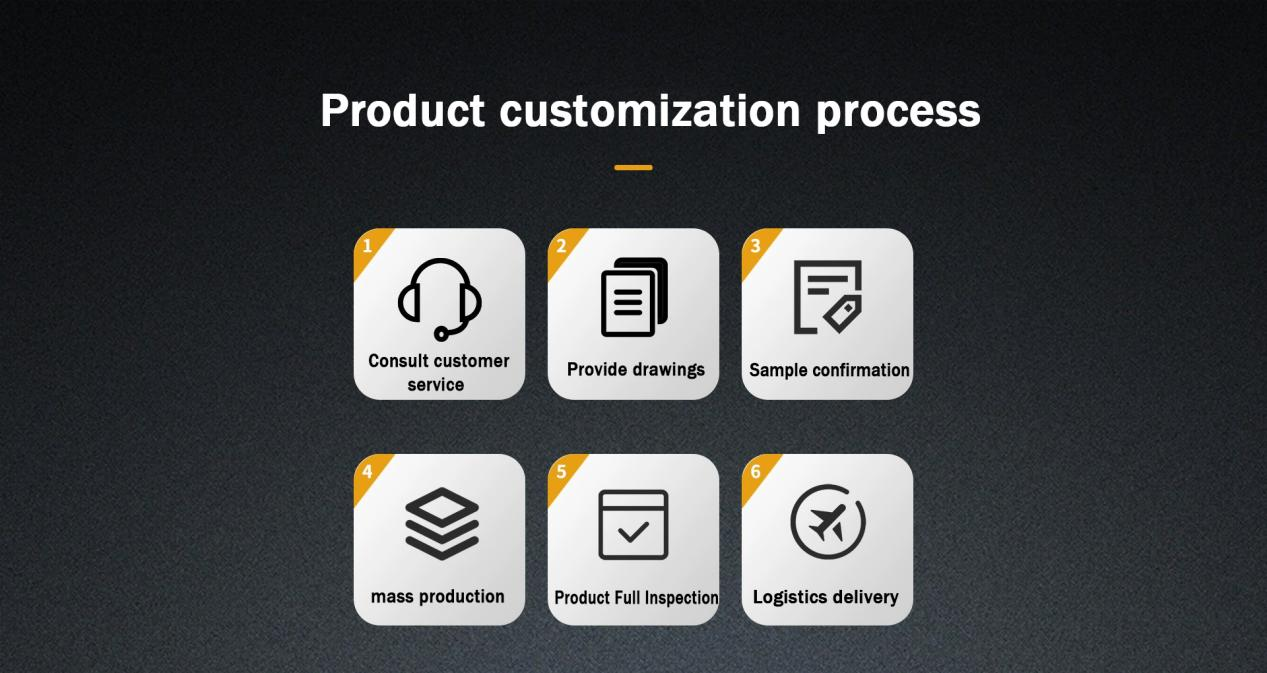
Step 1: Consultation with Drawings – The client provides 2D or 3D drawings (supporting formats such as STEP, IGS, DXF, PDF, etc.) and specifies material requirements, dimensional tolerances, surface finish specifications, and order quantities.
Step 2: Proposal Evaluation & Quotation – We assess manufacturing feasibility based on the drawings, recommend optimal materials and processing routes, and provide a detailed quotation itemizing machining costs, surface treatment fees, packaging charges, and more.
Step 3: Prototyping & Confirmation – We produce initial units or small-batch samples; mass production proceeds only after client approval. We offer rapid prototyping services to help clients fully validate product designs and manufacturing processes before full-scale production.
Step 4: Mass Production – Production is carried out in strict accordance with confirmed standards. Quality checks are documented at every stage to ensure batch consistency and on-time delivery.
Step 5: Inspection & Delivery – Finished products undergo comprehensive inspection. They are then securely packaged using scratch- and impact-resistant materials and delivered safely via agreed-upon methods; complete quality inspection reports are available upon request.
Our Commitment
We understand that every project embodies our clients' trust and expectations. Whether you require rapid prototyping during the R&D phase or stable, reliable batch processing for scaled production, we safeguard your project with professionalism, exquisite craftsmanship, and rigorous quality control. A customer-centric approach—crafting every product to perfection and ensuring zero defects—is our unwavering commitment. We look forward to building a long-term, stable partnership with you to transform design blueprints into high-quality aluminum alloy products.